Your brand deserves clarity, loyalty, and magnetism. I can help.
Want a brand that’s in perfect focus, attracts the right clients, and grows beautifully with your business? Get my design help now.
FYI, I'm usually booked at least a month out for web design and a couple weeks out for branding projects. I'll be available for new project work .
from my instagram
A few weeks ago, I caught up with my little bro Dan, and we had a great conversation (over dinner at the awesome Giusto in Newport, RI) about the joys & challenges of managing people, and how you’re required to do more of this as you move up the corporate ladder.
It sounded like he does a brilliant job of building up his employees, and it made me realize I don’t always do enough of that with my own team. Ahem... There’s an uncomfortable beauty in being stretched beyond your comfort zone, but it’s necessary if you want to grow.
This applies not just to managing teams but also to building trust with clients. As my business has evolved, I’ve been working to carve out a unique space in design - a space that focuses on building trust for brands that depend on it. Whether it’s managing people or managing brand perception, the same rule applies: growth and trust go hand in hand, and both require stepping into the discomfort.
If you’re in a high-trust industry like finance, enterprise tech, or higher education, building trust in your brand’s visual language is critical - and I’m here to help steward that trust.
Let`s build it together.
#leadership #businessgrowth #designthinking #trust #visualcommunication

What `The Boaters vs. The Mer-People` taught me about business:
Back in August, I took my nieces & nephews to camp in Maine. My husband was out there with them, playing a game of "The Boaters vs. The Mer-People" with the canoe and kayaks. I sat on the dock, laughing so hard at their antics (and the silly brilliance of that game name), that I`m sure I lost a few pounds.
But I couldn`t help thinking I should be out there playing with them. What was stopping me? Fear of not having a cool enough name for my battle character? Not looking like Heidi Klum in my bathing suit?
It got me thinking about how often we hold ourselves back — not just in play but in business, too. How many times do we sit on the sidelines, doubting our readiness, worrying about being perfect before we take action?
I`ve been steering my design services a new direction for a while now — creating a unique approach centered around fostering trust for high-ticket businesses. But I`ll be honest, putting my value into words has been a challenge. It feels big and a little daunting, but the key is showing up anyway. Trust isn`t just what I build for my clients; it’s also what I’m building in myself.
So here’s the lesson: Whether it`s on a lake or in business, stop waiting for "perfect" and dive in. The water`s fine — and the possibilities are endless.
Want to see how I’m helping businesses foster trust through design?
Let’s connect!
htps://atelierlks.com/creative-director-partnership
I had a fantastic brainstorming coffee date with my friend Grace Maguire, who’s a biotech marketing and communications maven. We talked about how engineers often create sales content that’s… well, too complex for public consumption. Their deep-dive diagrams and rabbit-holey reports may resonate with internal technophiles, but from the outside, they’re clear as mud (and boooring). 😵💫
Grace and I are the type who think, “Let’s shave these 10 pages down to a few bullet points and a killer graphic.” Simplifying complex ideas is what I love doing, especially for larger companies who know they need to build trust to survive.
Are you in biotech, engineering, or another technical field? Think your sales content is astronomically amazing? Let’s see if we can’t simplify it and make it truly effective. 🧬
👉 Let’s simplify stuff together.
https://atelierlks.com/services
🎸 The Wayninator (my hubby) and I recently rocked out to The Rolling Stones live at Gillette Stadium.
Seeing Mick Jagger, 80 years young, still singing and dancing was kind of amazing. The fact that this band still rocks stages after all these years is a simple testament to the power of staying relevant. Their iconic logo, with its subtle tweaks over time, remains instantly recognizable. It’s a lesson in brand longevity and endurance.
✨ Company brands - just like rock bands - need to adapt and keep fit without losing their identity. Whether it’s a more streamlined look for your marketing or an updated logo that`s more iconic than what you have now, keeping your brand fresh is crucial for building trust and desire... and satisfaction.
Let`s breathe new life into your brand and rock your marketing design!
https://atelierlks.com/rockyourbrand
🌟 Back in March, I had the distinct honor of mentoring at the Harvard Catalyst pitch competition in Cambridge, where bright minds showcased their long-researched ideas.
It was incredibly rewarding – plus, I made out with a kilo of cheese 🧀 from the lonely hors d`oeuvres table (no one was going for it, and I was NOT about to let any cheese go to waste). The pitch competition was inspiring, but many presenters missed the mark. They focused too much on details and not enough on story. In communication (whether venture capital is on the line or not), clarity and simplicity win every time.
🚀 Crafting a perfect pitch is like good design – every element should serve a distinct purpose. And the story of why people should pay attention must have distinct steps (hint: an in-depth slide about your team isn’t one of them). And of course, your branding should tell a compelling story that resonates deeply with your audience.
Start developing a pitch deck with a brilliant story that wins both money and hearts. And grab a Power Hour with me to up-level your pitch.
https://atelierlks.com/pitch-match
🛋️ Recall my trusty, mid-century desk that gave out on me?
Choosing a replacement was no small feat for this picky gal. I spent AGES researching the perfect, un-annoying standing desk, putting off the final decision because I was sure I’d find an even better option right around the corner.
Then it hit me (really it was my business coach Ian Crafford @ Vector Business Advisors who drove the point home) – I’d probably spent more time on research than the desk was even worth! It’s so easy for me to get caught up in the search for perfection, but sometimes, I just have to take the leap and commit.
💼 When it comes to branding, I work to present you with options that fit like a glove (and are un-annoying, of course). Whether it’s taking a load of marketing collateral off your plate or helping you build trust through your visual identity, my goal is to make your decision-making easier so you can focus on that critical business stuff. Because often, the perfect choice is right in front of us - we just need a nudge to see it.
Need help deciding? Let’s partner up.
https://atelierlks.com/partner-up
Can I vent about my recent desk disaster?
Picture this: Mid-webinar, my beloved held-together-with-spit-and-glue midcentury desk decides it’s had enough of holding up my iMac and collapses faster than a Jenga tower. 😩 My RIHub friends in the webinar may have noticed a sudden shift in someone`s webcam perspective that revealed their ratty slippers.
After a brief mourning period, I got to thinking about how we sometimes cling to things in our business that no longer serve their purpose.
Just like my desk needed an upgrade to (literally) support my work, businesses often need a refresh, too. 💡 Whether it’s an outdated logo or marketing design that doesn’t align anymore, sometimes a big change is what’s needed to build trust and thrive.
Let’s chat about how to make your brand as sturdy as possible (no collapsing furniture included).
https://atelierlks.com/get-a-sturdy-brand
P.S. The desk in the picture is pure click-bait. My desk is way cooler than this one. It currently has a home in my basement until I can discern which family member or friend to inflict it on. 😏
How do you play Cupid for investors? 💘
By crafting your pitch match made in heaven, of course.
Yours truly has the secret sauce to make investors fall head over heels, all in four breezy steps:
Get `em hooked emotionally, crank up the urgency, dazzle with killer design, and build trust.
Is this idea arrow headed straight for your heart?
Learn how to craft that pitch match - check out my latest article.
https://atelierlks.com/pitch-match
my recent work

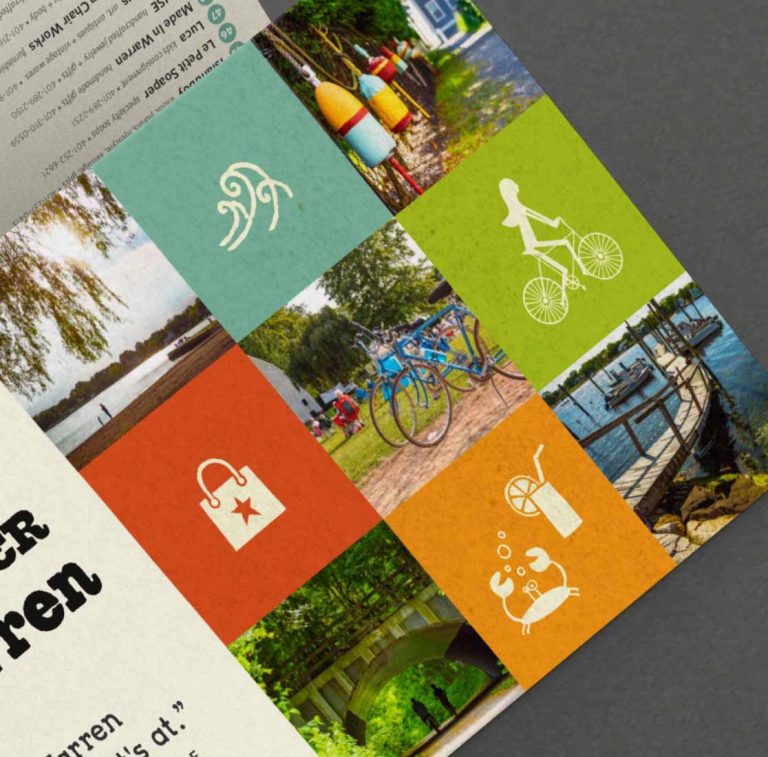
I’m based in beautiful Cranston, Rhode Island, where life is good, great coffee is right nearby, and the leaves are gorgeous in autumn. Oh, and Warren, RI, is pretty cool, too.